

Coexist?
Is the "Coexist" narrative enough?

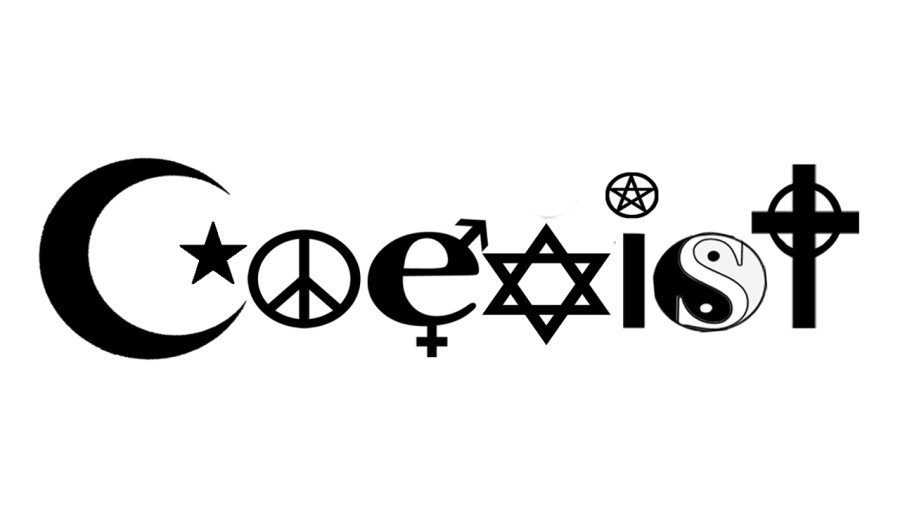
This concept has been around for a while and has become quite popular.
I think the intention is wonderful, and it’s certainly a step in the right direction as humanity constantly struggles with religious ideologies and their associated cultural and social identities.
I asked AI for a short summary of the “Coexist” narrative, especially from a Christian perspective. Here are the main points:
The “coexist” narrative in religious contexts often centres on peaceful cohabitation among different faiths. However, this ideal faces criticism from some Christian perspectives, which argue that true coexistence shouldn’t require compromising core doctrines — for example, Christianity’s exclusive claims about salvation through Jesus (John 14:6).
Critics also warn that reducing complex faiths to logos risks trivializing their unique beliefs and practices.
While mutual respect and collaboration are encouraged, many emphasize that theological differences — such as views on God, salvation, or the afterlife — are irreconcilable and shouldn’t be ignored for the sake of superficial harmony
So right from the outset, we have a problem, and even though I limited it to Christianity, it’s obviously the same issue with religions like Islam.
To truly "coexist", however, requires far more liberal interpretations of our beliefs – to the point where we have to let go of any dogma so that we can truly accept the personal belief systems of those that don’t align with ours.
Christianity is a huge mixed bag – so big that it’s stuffed with around 40,000 denominations, sects and cults. Some of these recognise the personal and subjective nature of their faith and are genuinely accepting of other people’s spiritual journeys.
These often tend to be more “nominal” Christians, usually culturally based on where they were raised. But there are many who see a far more universal thread as the foundation of their beliefs and pretty much filter it down to just loving each other and following the social gospel of Jesus.
But there are a heck of a lot of more traditional and fundamentalist Christians whose faith completely depends on indisputable dogma. They have creeds that clearly state what it means to be a Christian; formalised doctrines enshrined in endless books and commentaries; and "statements of belief," all of which are designed to set very clear boundaries around who is in or out.
These cannot be compromised by conceding that we are free to believe them or not.
They are “THE TRUTH” ©
Accepting that others have valid beliefs we must respect undermines everything and reduces Christianity to a subjective and cultural belief system.
So as much as I love the idea, we actually need to rise above the “Coexist” narrative and confront the issue of dogma in ALL religions. And that is a very difficult and long-term task. But it’s not impossible!
We can begin by gently confronting dogma at individual, personal levels with questions, constantly challenging assumptions; addressing the existential issues that religious dogma provides easy answers for; and helping people to be brutally honest with their needs for religious belief in the first place.
It took me many years to be honest enough with myself about why I believed the things I believed. But it was worth every minute of struggle and unravelling to discover a place far beyond the confines of any religion. A place where “Coexist” actually begins to mean something tangible.
It’s time to “grow up” (and I don’t mean that in a derogatory sense) and see how crippling and detrimental religious dogma of any kind is to humanity.